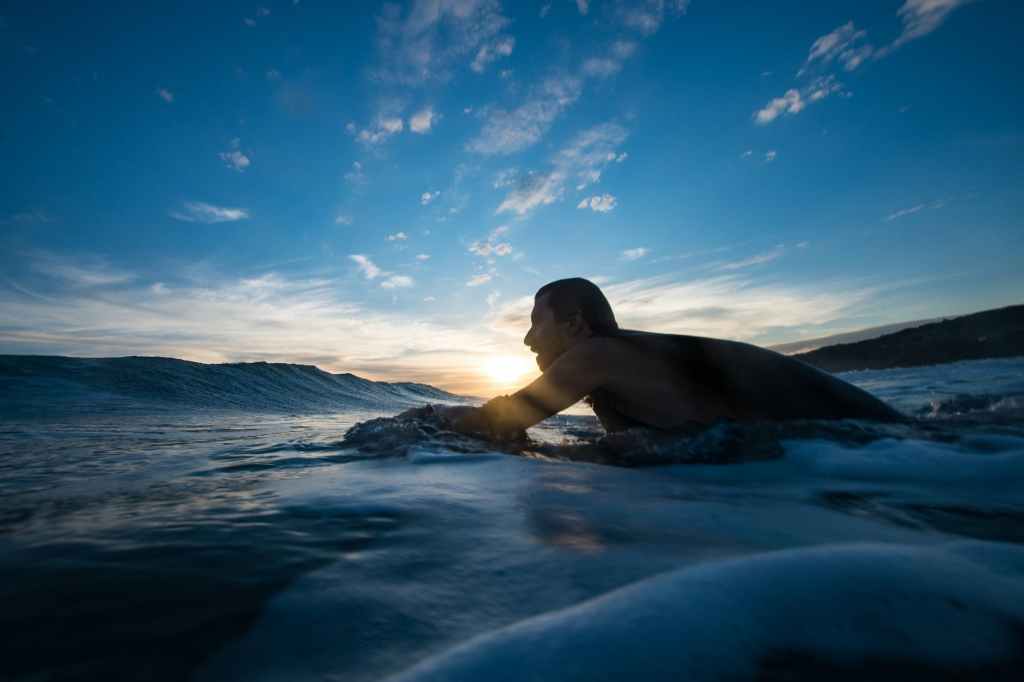
Mapping out our route down the Great Ocean Road allowed us to read about all the natural wonders, landscapes, and cities along its 263 km path. There were the giant rock formations that were not to be missed, hikes through rainforests and waterfalls, and quaint villages filled with weekenders and retirees.
The road twisted and turned along the south-east Australian coastline. Around each corner was another breathtaking vista, another unbelievable terrain of trees and colors I’d never seen before. How could so much visual amazement be packed into a relatively short distance? I needed to choose a place to stay overnight. The first evening would be a late arrival since the entire day would be dedicated to stops along the way. But the next full day, we could deeply explore one of the coastal towns. I chose Torquay. It was where surfing got its start and the city where most surfing brands are founded and still operate. How fun! The original surf city! The hotel was quickly booked and confirmed!
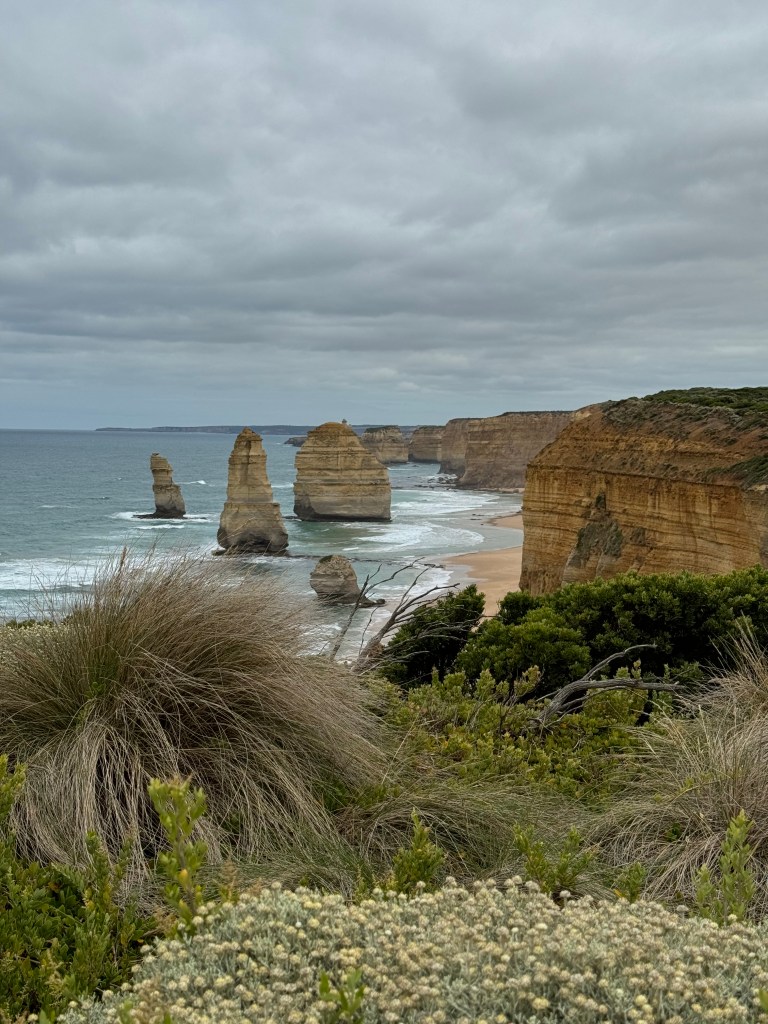
I immediately started searching for surf schools that offered lessons. How could we be at the famous Bells Beach without catching some waves?
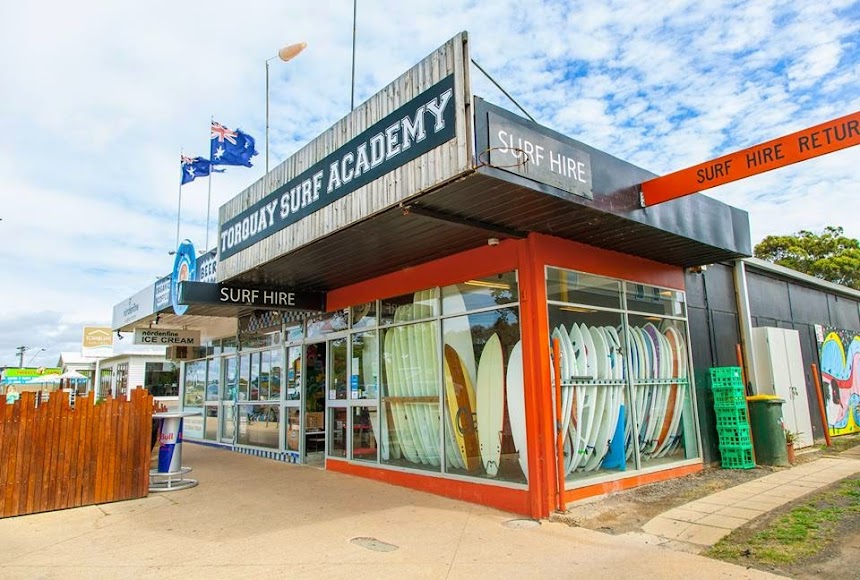
Ollie and I woke up early, dressed, and ran down for a quick run through the breakfast buffet. Admittedly, we were both excited and nervous. I chose to eat light, Ollie carb-loaded. The school was a fast ride down the beach. We checked in and were sized for wet suits. We both disappeared into dressing areas to start the sweat-inducing process of squeezing into the snug and thick rubber suits. We both commented how thin we felt once the suits were zipped up, patting our flat tummies.
Luckily, we were the only two for the 8am group class. I fully expected to be the only adult in a 20-person class of Australian fourth and fifth graders who would look oddly at the two “old dads” in their class. So, semi-private instruction at a group discount was a major score and a sign that surfing lessons are the right call!
We met our instructor, Taylor. She was a cute, sporty surfer girl who obviously rolled out of bed five minutes earlier. Ollie and I looked at her and looked at each other. Haven’t we seen her before? We shrugged and headed out of the store into the brisk morning air in our wet suits for the two-block walk to the surfing beach. As we walked, we got to know one another. Taylor was Canadian and studying psychology and international relations on a three-year student visa. But we also confirmed she was the bartender who served us pints at the local pub the night before. Resort towns are notorious for locals juggling multiple jobs — the sales clerk becomes the waiter, the bartender, and the hotel clerk, all within the same visit. Our bartender teaching us to surf is a typical resort town occurrence, and no reason for alarm (I hope.)
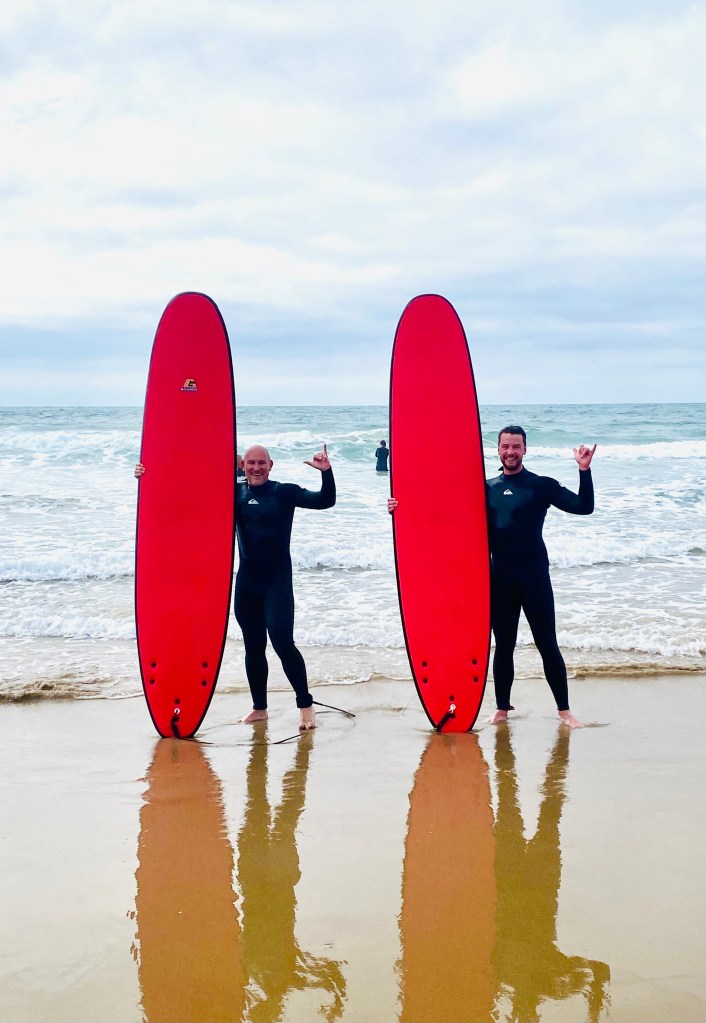
Taylor put us on longboards, the easiest board for first-time surfers. We carried our boards like badass surfers down the beach to the spot she felt was good for catching the right waves. We placed our board face down in the sand, and this is where our badass image began to crumble. We started drills on the board pretending to paddle, paddle, paddle to get up on the wave. With our hands firmly placed on each side of the board (not clutching the edge for dear life, which was my default form), we were to get into the cobra position and then quickly pull our knees into the open area left by the cobra. Then, we were to quickly kick our dominant foot in front, leaving the other foot behind us to stabilize. These movements are to occur in seconds while a wall of water is chasing behind you, trying to crush you and your board against the sandy beach ahead. We did a few practice drills on the sand, and then we took our boards into the cold, powerful waves of the Bass Straight.
The waves were loud and powerful, twice as big as the ones I’m most familiar with in the Gulf of Mexico. Still, thankfully, they weren’t the size of waves you see in surf competitions on ESPN. The inlet was wide but shallow; the entire lesson, we could touch the ocean floor, which seemed to be free of shells and rocks, another plus for this spot. Taylor got in front of my board, holding it, and instructed me to get on the board, hanging my toes just off the end as instructed (hanging ten, indeed.) We waited on the right wave, and she yelled, paddle, paddle, paddle as the back of the surfboard lifted into the air, and I pulled water through my cupped hands, trying to place myself in front of the wave. I got into the cobra position, wobbled, and crashed underneath the wave. I found my footing, blew salt water from my nose, and fought through wave after wave back to Taylor and my next opportunity to be a badass! Paddle, paddle, paddle, cobra, knees, crash. Fight 20 waves, paddle, paddle, paddle, cobra, knees, ran out of runway I was on the beach, I took too long. Retrieve surfboard, and I stomped through the waves again, hot underneath the wet suit and visibly out of breath. I got back on my board, and Taylor grabbed the nose of my board, looked me in the eyes, and said, “Cal, you think way too much. I can see you running a million calculations in your head. Do you usually overthink everything?” I floated there stunned; I felt so vulnerable, so exposed. Within a few attempts to catch a wave, she saw right through me. “Yes, yes, I totally overthink everything. It’s a skill I excel in; worrying is my sport of choice, business casual is my uniform, and the four-box matrix is my safety gear. Overanalyzing scenarios and risks is the air I breathe; it’s how I survive this world; it’s how my life seems so predictable and easy. It’s also why I may or may not be happy with the current state of my life (analysis pending.) Taylor added more twenty-something wisdom, “It’s okay, Cal, you’re going to fall. It’s how you learn; it’s just water; you’ll take a splash and get back up.”
“Cal, you think way too much. I can see you running a million calculations in your head. Do you usually overthink everything?”
Taylor the Surf Instructor
I wasn’t only getting pounded in the face full force by literal waves but also being slapped by a figurative tsunami life lesson. You can’t overthink surfing; you must let your mind and body do what comes naturally, free them to make a million calculations, observations, and checklists, allow your body to get a FEEL for the water and your balance, and subconsciously fine-tune your timing and steps. Let go of perfection and just do it. And if your body puts your left foot forward instead of your right, that’s okay. If your body skips the cobra stance and goes straight onto your knees, that’s okay.

As in life, instructions aren’t foolproof; they are just a collection of optimized experiences from those who excel in an activity. They try to explain natural actions in ways that make sense to them and convey a process resulting from a million subconscious actions. While floating on my board, my mind raced through all the sports and arts I overthought: basketball, baseball, soccer, piano, football, water polo, you name it; I tried to excel at all of them using manuals and bullet points. But, there is no single way of getting a basket, no perfect path to scoring a goal. There are some basic ground rules to know, and the rest of the instructions are details that historically had incremental improvement toward success, but clearly not the only way to score. Instructions manuals can’t just read, “Don’t overthink it, just do it.” Imagine the hit to training and coaching professions if it were that simple.
We are all on this planet surfing life. Waves represent life’s variables, ever-changing but predictably coming our way. Our surfboards represent our tools and resources; some have longboards, easier to get up on but less fun and flexible than shorter boards. Hanging ten from the back of our boards keeps our body and mind connected to the water (changing life circumstances) and its movement, representing spirituality, reflection, and communication. Finally, our footing represents life balance, strength, and the agility to make the thousands of big and small adjustments needed to stay on the board and steer it in the desired direction to reach our destination and have fun.
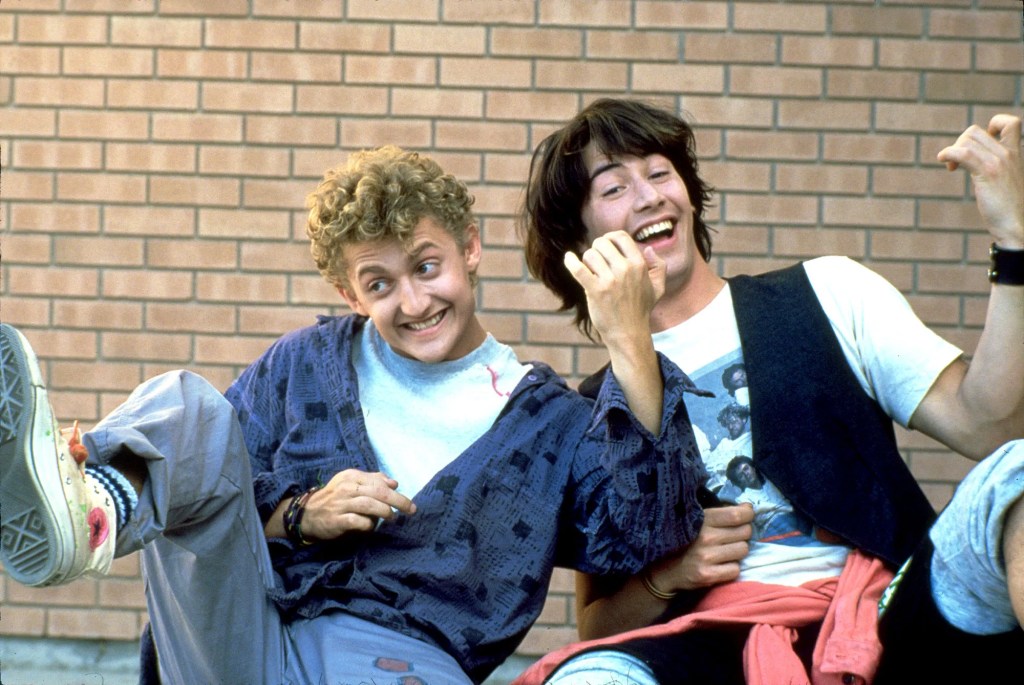
It’s not just sports that I overthink; it’s everything. Analysis has its place, and it’s a necessary discipline. However, letting go and allowing things to unfold or solve could be the missing link to many yet-to-be-solved questions and challenges. So, when I return, and you find me acting oddly like Keanu Reeves, saying things like, “Whoa, Dude.” or “Excellent!”, just roll with it, I am.

 Around the World with Cal
Leave a comment